Physical Address
304 North Cardinal St.
Dorchester Center, MA 02124
Physical Address
304 North Cardinal St.
Dorchester Center, MA 02124

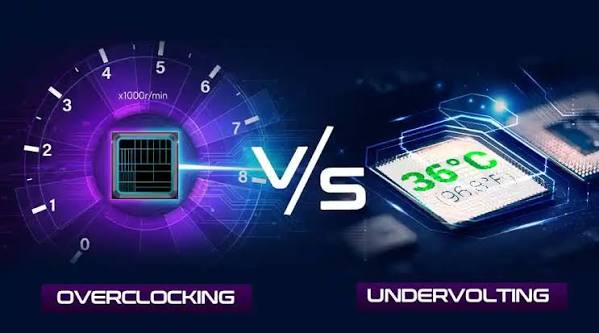
For decades, the holy grail of the PC enthusiast community was the art of overclocking: the meticulous process of forcing a Central Processing Unit (CPU) or Graphics Processing Unit (GPU) to operate at clock speeds far beyond the manufacturer’s official specifications. It was a badge of honor to buy a mid-tier processor and, through BIOS manipulation and robust cooling, push its performance to rival that of flagship silicon costing twice as much.
However, extracting this “free” performance requires breaking the physical and electrical boundaries set by the manufacturer. Overclocking is not a software trick; it is a brute-force alteration of electrical physics. When you push silicon past its factory limits, you introduce immense thermal loads, severe stability risks, and the invisible threat of physical hardware degradation.
This comprehensive guide dissects the triad of overclocking—Frequencies, Voltages, and Thermals—explains the destructive phenomenon of electromigration, outlines the strict protocols for stability testing, and evaluates the diminishing returns of manual overclocking in the modern hardware landscape.
To understand the risks of overclocking, you must understand the mathematical relationship between how fast a chip runs and how much electricity it requires.
The critical danger of overclocking lies in the mathematical formula for dynamic power consumption: $P = C \times V^2 \times f$
(Power = Capacitance × Voltage Squared × Frequency).
Because voltage is squared in this equation, the relationship between voltage and heat is not linear; it is violently exponential.
The immediate and most obvious risk of overclocking is uncontrolled thermal output. Factory cooling solutions are engineered with strict thermal budgets based on stock voltages. When you manually overvolt a processor, you instantly shatter that thermal budget.
Many novice overclockers believe that as long as the CPU is kept cold, it is perfectly safe to pump massive amounts of voltage into it. This is a fatal misunderstanding of physics. Even if you use liquid nitrogen to keep a CPU at sub-zero temperatures, excessive voltage will physically destroy the chip through a process called Electromigration.
The most common trap of overclocking is the “Boot Illusion.” Just because a PC boots into Windows, opens a web browser, and runs a 5-minute benchmark without crashing does not mean the overclock is stable.
An unstable overclock is a ticking time bomb. It will cause silent data corruption, writing corrupted bits to your hard drive, ruining operating system files, and causing sudden application closures during critical work.
Validating an overclock requires grueling, mathematical stress testing designed to push the silicon to its absolute electrical breaking point.
If you read forums from 2012, manual overclocking was mandatory for enthusiasts. Today, the landscape is entirely different. Traditional, manual fixed-voltage overclocking is largely considered obsolete, inefficient, and often detrimental to modern hardware.
Modern CPUs (AMD Ryzen 7000/9000, Intel Core 13th/14th Gen) and GPUs (NVIDIA RTX 4000 series) are astonishingly smart. They feature internal micro-controllers that analyze temperature, electrical current, and workload type at a rate of 1,000 times per second.
Because modern chips are pushed to the absolute redline straight out of the box, pushing them further yields diminishing returns (e.g., pulling 100 extra watts for a 3% gain in framerates).
Today, enthusiasts utilize tools like AMD’s Curve Optimizer or Intel’s Adaptive Voltage Offsets. Instead of pushing voltage up to reach higher clocks, they push the voltage curve down (Undervolting). By starving the chip of unnecessary factory voltage, the CPU runs drastically cooler. Because it runs cooler, the CPU’s own internal boost algorithms sense the thermal headroom and automatically boost the clock speeds higher and longer than they would have at factory settings.
For competitive overclockers utilizing liquid nitrogen, manipulating voltages remains a thrilling sport. However, for the daily gamer, video editor, or workstation professional, traditional manual over-volting is a relic of the past. The microscopic gains in performance are completely eclipsed by the massive increases in thermal output, the acoustic nightmare of screaming cooling fans, and the very real risk of accelerating silicon degradation. Modern enthusiast tuning requires working with the silicon’s boost algorithms through precise undervolting, rather than trying to brute-force past them.