Physical Address
304 North Cardinal St.
Dorchester Center, MA 02124
Physical Address
304 North Cardinal St.
Dorchester Center, MA 02124

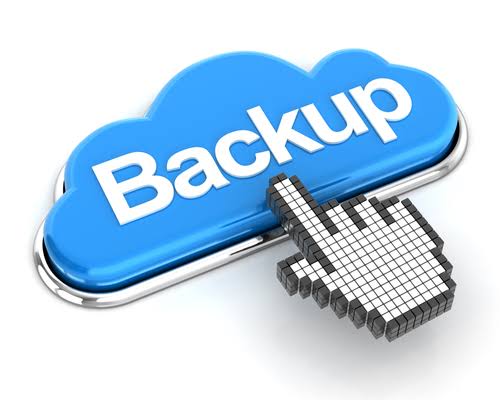
Data loss is rarely a matter of bad luck; more often, it is the predictable consequence of relying on single points of failure. Hard drives physically fail, ransomware encrypts local networks, human error deletes critical databases, and natural disasters can destroy an entire building in minutes. If a piece of data exists in only one physical location, it is already on the path toward permanent loss.
To protect against every realistic scenario of data destruction, the technology and digital preservation industries rely on a universally acclaimed framework: The 3-2-1 Backup Strategy. Originally coined by professional photographer Peter Krogh in his seminal work on digital asset management, this framework has been adopted by enterprise IT departments, cybersecurity experts, and government agencies as the foundational baseline for disaster recovery.
The 3-2-1 rule is elegant in its simplicity, yet mathematically formidable in the protection it offers. This comprehensive guide breaks down the architecture of the 3-2-1 strategy, explores modern evolutions designed to combat advanced cyber threats like ransomware, and provides a clear blueprint for implementing it across your personal or professional digital infrastructure.
The strength of the 3-2-1 rule lies in its ability to isolate backups from shared points of failure. It dictates that for any piece of critical data, you must maintain:
The rule requires that you maintain your primary (live) working data alongside at least two separate backup copies.
Having only one backup copy (for a total of two copies) means that during the exact moment you need to restore files—which is usually right after your primary system has crashed—you are operating with zero safety net. If your sole backup drive turns out to be corrupted, or fails during the intense reading process of a restore, your data is gone forever. Maintaining three total copies ensures that even if a primary drive crashes and a backup drive proves unusable, a third copy remains untouched.
Storing your primary data on an internal NVMe SSD and your backup copy on a secondary internal SATA SSD inside the exact same desktop computer is a recipe for disaster. A single rogue power surge, a power supply failure, or a localized motherboard failure can instantly fry every component inside that chassis simultaneously.
The second pillar mandates that your backups reside on at least two fundamentally different types of storage technology. Different storage media possess entirely different physical failure mechanisms. For example, you might combine:
By diversifying the physical technology holding your data, you insulate your backups against systemic hardware flaws, batch manufacturing defects, and environmental vulnerabilities inherent to a specific medium.
Local backups are ideal for speed, but they offer zero protection against physical environment disasters. If a house fire, regional flood, earthquake, or burglary occurs, any backup drives sitting on the same desk as your primary computer will be destroyed or stolen along with it.
The final pillar requires that at least one backup copy be kept in a geographically distinct physical location. Historically, this meant taking physical tape cartridges or external hard drives and driving them to a bank safety deposit box or a secondary office building. Today, off-site storage is predominantly achieved automatically via secure, encrypted cloud storage providers (such as Amazon S3, Backblaze B2, or Microsoft Azure) operating in remote data centers.
To understand the power of the 3-2-1 rule, consider the statistical probability of simultaneous hardware failure.
Suppose a standard commercial hard drive has an average annual failure rate of roughly 1 in 100 (1%).
The strategy converts catastrophic data loss from an inevitable eventuality into a statistically negligent anomaly.
While the traditional 3-2-1 strategy was designed primarily to protect against hardware failures and physical disasters, the digital threat landscape has changed dramatically with the rise of sophisticated ransomware.
Modern ransomware does not just encrypt your primary hard drive; it actively scans your local network (LAN), searches for unmounted network shares, finds mapped NAS drives, and targets cloud storage sync folders to destroy or encrypt your backups first before alerting you to its presence. If your backups are constantly connected to your network, they can be corrupted simultaneously with your live data.
To counter this threat, cybersecurity organizations like Veeam have expanded the classic framework into advanced enterprise standards:
This updated standard adds two crucial elements:
For mission-critical enterprise environments, the 4-3-2 model provides an even higher layer of redundancy:
Implementing a true 3-2-1 backup pipeline does not require an enterprise budget. It simply requires a disciplined structure.
Not all data requires the exact same level of aggressive redundancy.
Choose your primary workspace and pair it with an automated local target.
Connect your system or local NAS to an off-site repository.
To ensure your 3-2-1 architecture functions correctly, you must avoid several widespread traps that create a false sense of security.
This is the single most dangerous mistake made by modern users. Services like Google Drive, Dropbox, OneDrive, and iCloud are file synchronization tools, not backup tools.
An unverified backup is merely a hypothesis. You do not truly have a backup strategy until you have successfully executed a full restoration drill.
At least twice a year, perform a “disaster simulation”:
In many cases, users discover too late that their backup software was quietly failing due to an expired password, a permission error, or corrupted block sectors that went unnoticed for months.
If your local NAS or cloud storage uses the exact same master password as your local computer, or if your cloud account lacks Two-Factor Authentication (2FA), an attacker who gains access to your primary machine can easily log into your cloud dashboard and delete your off-site snapshots in a few clicks.
Always utilize unique, complex passwords generated by a password manager for your backup targets, restrict administrative access rights, and mandate hardware-based or application-based 2FA across all off-site storage platforms.
| Copy | Medium | Physical Location | Purpose |
| Copy 1 (Primary) | Fast Internal NVMe SSD | Local Computer / Workstation | Live, day-to-day active production work |
| Copy 2 (Local Backup) | HDD Array in NAS (RAID 5/6) | Local Network (Same Building) | Immediate recovery from file deletion or hardware crash |
| Copy 3 (Off-Site Backup) | Encrypted Cloud / Immutable Storage | Geographically Remote Data Center | Absolute protection against fire, theft, or physical disaster |