Inside the Case: What Do the CPU, RAM, and Motherboard Actually Do?
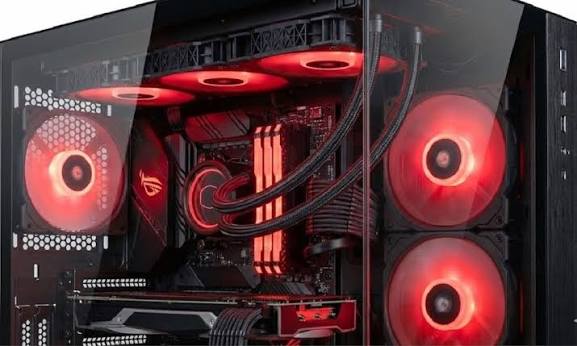
When you look at a computer tower, the outer shell is just a protective metal or glass enclosure. The true brain and nervous system of the machine reside entirely on the inside, anchored to a single large circuit board. To understand how a computer functions, you do not need an engineering degree; you simply need to understand the distinct roles of the three most critical internal components: the Central Processing Unit (CPU), Random Access Memory (RAM), and the Motherboard.
1. The CPU (Central Processing Unit): The Brain
If the computer is a human body, the CPU is the brain. It is a small square of silicon, usually no larger than a postage stamp, covered by a metal lid and a massive cooling heatsink.
- The Function: The CPU is responsible for executing instructions and performing calculations. Every time you click a mouse, open a web browser, or type a letter, millions of mathematical and logical instructions are sent to the CPU. It processes these instructions at blinding speeds—measured in billions of cycles per second (Gigahertz or GHz).
- The Core Concept: Modern CPUs are multi-core processors, meaning a single physical chip contains multiple independent processing units (cores) working in parallel, allowing the computer to handle multiple heavy tasks simultaneously without freezing.
2. RAM (Random Access Memory): The Short-Term Workbench
While the CPU is exceptionally fast at calculating data, it cannot store much information by itself. It needs a workspace to keep data it is actively using right now. That workspace is RAM.
- The Function: RAM consists of thin circuit boards (modules) inserted directly into the motherboard. It holds data for all running applications and open files. When you open a game, a web browser with twenty tabs, or a video editor, those programs are loaded out of slow permanent storage (your SSD) and placed into ultra-fast RAM so the CPU can access them instantly.
- The Volatility: RAM is “volatile” short-term memory. The second you shut down or restart your computer, everything stored in the RAM is completely wiped clean. It only remembers things while the machine is actively powered on.
3. The Motherboard: The Nervous System
None of the components discussed above can function independently. They need a physical platform to connect them, supply them with power, and allow them to talk to each other. That platform is the Motherboard.
- The Function: The motherboard is the massive circuit board that forms the backbone of the PC. Every single component—the CPU, RAM, graphics card, storage drives, and power supply—plugs directly into it.
- The Communication Hub: It features a complex network of microscopic copper traces (called buses) that act as electronic highways, shuttling data back and forth between the CPU, memory, and peripherals at near-light speed. Without the motherboard’s chipset and electrical pathways, the components would be isolated islands of silicon.
Computer components basics